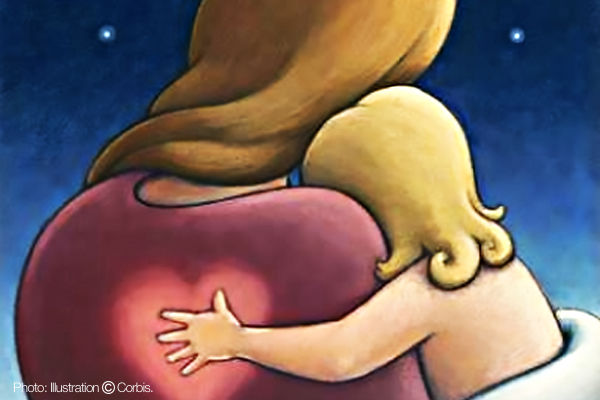
Internet may be the main option to consume content, in many diferente ways, but it can be quite passive for some people, and active for others. Some like to position themselves or feel practically “forced” to interact with what they read or see, such is the strength that the posted content has, and the need to make their own voice heard.
By Liana Fernandes
Originally published in Mais2 Digital, in Portuguese, in July 2020.

But it is also very easy and comfortable to scroll the timeline through texts, photos and videos, for example, without clicking on anything, without liking, commenting, saving or sharing the content. Engagement can be hard to come by. It is a process of conquest, almost a date that has to match the brand and the public.
However, making consumer engagement with branding happen, creating the connection is what will develop customer identification and trust in a company. And then, if the rest of the work is well done, the reward goes beyond increasing the exposure of a brand on the social media or give them a public recognition. The chance of generating revenue also grows.
Building relationships
For literally centuries, content
has been used to build relationships. It doesn’t matter now whether we are talking about Benjamin Franklin’s annual Poor Richard’s Almanack, published in 1732, letters or poems, comics, books, advertisements, newspapers, magazines, blogs or social networks and media. But at some point in these years, strategic content became a very important figure for companies. And its producers have earned a well-deserved place in the sun.
Times have changed, technology has advanced, and it has become essential for business with all data it holds. Technology actively contributes to the construction of a good content. Still, it is difficult for some companies to understand their audience. Perhaps, there is a lack of a more personal, live approach, in which it is possible to
obtain real feedback. That eye to eye, you know? After all, if we are living in times when companies are increasingly concerned with the user experience, doing so is a way to get to know them better and show they care. Creating relationship is a goal!
At the same time, it must be kept in mind that no audience is static. Consumers have diverse interests, goals and experiences, and they change all the time. So, get to know the current audience of a company or the audience it wants to reach is a mission that never ends. And, for communication to be effective, content producers need to get the right tone and use the various strategies to achieve the objectives in the time and platform desired by a company. It's quite a challenge!
Many Christmas campaigns in 2020 were different. Very emotional and nostalgic. Like everything else that year, they reflect changes, necessary transformations, after all, for many people, not even Christmas was like in the past years. But it is also worth looking at that moment from the commercial angle: many companies have bet on selling content, and not products directly, to win the public's hearts.
By Liana Fernandes
Originally published in Mais2 Digital, in Portuguese, in November 2020. Reviewed in April 2022.
2020 was a difficult and uncertain year: Covid-19 declared as a pandemic, lockdown in many countries, Brexit, Black Lives Matter, vaccine, world economic recession, American military attacks on Baghdad, elections in the US and invasion of the Capitol were just a few exemples. With all that happening, Christmas could never be same.
Aware of this, some brands designed different strategies for their sales in the end of the year. The clothes store Barbour encouraged sustainability by repairing an old coat rather than buying a new one, and took the opportunity to reinforce the quality of its pieces. Some English supermarket brands also launched emotional campaigns. Tesco's, for exemple, said there was no way to consider mischief this holiday season, while Sainsbury's features a black family enjoying Christmas in a year of such tragic unacceptable
episodes reported around the world against black people.
Sainsbury's features a black family enjoying Christmas in a year of such tragic unacceptable episodes reported around the world against black people.
Following the social causes subject, The Body Shop helped, with its campaign, to raise awareness of the number of homeless women. As you can see, there is no doubt that for 2020 there were no other way for advertising than emotive ads.
I have selected the three Christmas campaigns I liked the most: Disney, Boots and John Lewis. Disney campaign was themed “From Our Family To Yours” and told the story of a grandmother, her granddaughter and the family traditions that have brought them together over the years. The animation ran in 29 countries and parts of Asia, and marks 40 years of partnership
with Make-A-Wish, a children's charity.
Boots' campaign was based on acts of kindness. With the theme
“What the World Needs Now”, the brand recognizes that it was an atypical year, and attitudes of care and kindness are what we needed most. The brand had also donated basic hygiene products
worth a total of £1 million to The Hygiene Bank, for some of the millions of people in the UK who live on the poverty line.
Lastly, the 2020's John Lewis campaign was inspired by the British response to the pandemic and the gestures of kindness that have emerged in communities. John Lewis and her partner Waitrose proposed a charity theme rather than gifts through “Give a Little Love”. The campaign aimed to raise £4 million for two charities: FareShare, which supports those facing hunger, and Home-Start, for mums and dads in need.
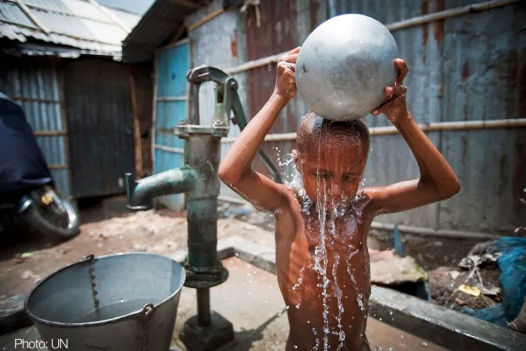
Every year in the March 22sd is celebrated the World Water Day to remind us the actions we have to take now in order to preserve and protect sources of water. And to help the governments around the world to think and commit to solutions to the challenges related to sanitation and safe water, the UN has created the Water Action Decade, that goes from 2018 to 2028.
By Liana Fernandes
Originally published in Blog Lia Fernandes, in Portuguese, in March 2018.
A few simple actions can make a big difference: protecting nature, reducing pollution and using water responsibly, for exemple. This are rules everyone knows they should follow as citizen. However, it is not that simple to make people aware and turn theory into practice. And that is why the UN published a recent
data to reproduce the urgency of this issue. He are some data:
1) 2.4 billion people in the world do not have basic sanitation;
2) At least 1.8 billion people worldwide use a source of drinking water contaminated by faeces;
3) More than 80% of the water resulting from human activities is discharged into rivers or seas, without any previous treatment;
4) Since 1990, 2.6 billion people have gained access to sources of safe drinking water, but 663 million people still live without it;
5) Every day, nearly 1,000 children die from preventable water and sanitation-related diseases.
The Action Decade proposal is to change this scenario by 2030
China, Finland, Israel, Japan, Singapore and Tajikistan have
already started to develop strategies for a more sustainable consumption of water, and to rehabilitate nature.
It is worth encouraging the development of high technology for irrigation in the field, planting trees, talking to those around us about doing something good now, so that children, grandchildren, and great-grandchildren can have good living conditions, and whatever else comes to mind. to help change the current scenario. Let's play our part?
One day, you try to read a book, but can’t understand the words. Later, you get lost in your own neighborhood. Eventually, you won’t recognize those you love. Your body is still there… but you’re gone.
By Anita Bartholomew
Adaptation: Liana Fernandes
Article originally published in Reader’s Digest international editions. Adaptation published in Reader’s Digest Brazil (Seleções), in Portuguese, in May 2012.
* Localizations made by me are in italic.
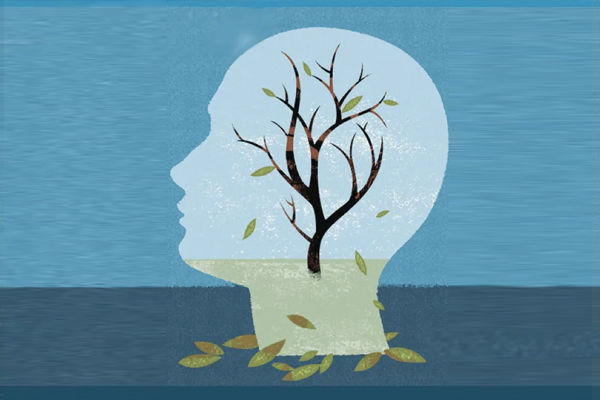
Alzheimer’s Disease was first identified in 1906 by German scientist Alois Alzheimer. Today, the World Health Organization estimates some 18 million people suffer from the cognitive disease; this number is expected to rise to 34 million by 2025. It will have a huge impact on our society.
According to the Brazilian Alzheimer's Association (ABRAz), there are about 1,200,000 people with the disease in the country.
How do you know if it’s Alzheimer’s?
Anyone can struggle, at times, to remember the title of an old movie, or the name of an acquaintance, or why they went to the fridge. But the first symptoms of Alzheimer’s Disease are more dramatic than occasional memory lapses.
Dr. Márcio Fernando Borges, Geriatrician and Content Editor of the Caring for the Elderly portal, the level of attention in the elderly is lower and the memory capacity is reduced, but this, in a healthy individual, does not change the ability to carry out their daily activities.
“Mom was always forgetting silly things, but it was around October 2003 that she had the most obvious symptoms of Alzheimer's. The doctor requested some specific tests, such as tests of general knowledge and reading. She showed so much difficulty that she couldn’t answer the questions or write sentences.”, says Sonia Maria R. L. Borba, 58 years old, retired by Eletrobras Furnas and who took the Alzheimer’s caregiver course at Fundação Real Grandeza, to provide assistance to her mother, Margarida (87), with the disease for 10 years.
People with incipient Alzheimer’s are unable to do what they’ve always done, like paying bills or counting out money for a purchase. A study published last year [2011] in the Journal of the American Medical Association calls such difficulties “the canary in the coal mine of impending dementia.” The sense of smell often diminishes before the disease is apparent. Or its onset can make people suddenly suspicious of those they have always trusted.
(...)
Treating the Alzheimer’s symptoms
If Alzheimer’s disease is diagnosed, there are several drugs that treat the symptoms, including Aricept, Exelon, and Memantina, which original commercial name in Brazil is Eranz. Rivastigmine, Donepezil and Galantamine, called anticholinesterase drugs because they increase the amount of acetylcholine in the brain, are also already approved drugs for Alzheimer's disease.
These drugs may improve memory and reasoning symptoms temporarily, say several experts, but they might not work for everyone. According to Professor Blennow, “the long term outcome is not well known” and the disease will probably “catch up” in the end. “They don’t do anything to slow disease progression,” says Kurt Brunden, Ph.D., who is in charge of neurodegenerative disease drug research at the University of Pennsylvania.
Dr. Marco Py, Neuro-ICU Coordinator at the Clementino Fraga Filho University Hospital
and Neurologist at the Deolindo Couto Institute of Neurology, at UFRJ, explains that, in general, recent memory is the first to be affected, because the old one is stored in several brain areas, not depending so much on the structures primarily affected by the disease, such as the hippocampus.
What can be done to prevent dementia?
There are several factors that can trigger or accelerate the disease, in addition to genetic components, such as diabetes, high cholesterol, high blood pressure and smoking.
Researches have shown "how to stimulate the brain's own protective systems," says Karen Duff of Columbia. Most brain stimulation involves minor lifestyle changes, some of which are effective even after symptoms appear. Most of these ways of preventing or delaying Alzheimer's disease that scientists have identified — including lifestyle brain stimulation.
(...)
“There are some very interesting works with non-steroidal anti-inflammatory drugs, such as aspirin. It appears that people who take this drug often are less likely to suffer from Alzheimer's.” highlights Dr. Marco Py. “And seems like that coffee, as well as moderate consumption of grape juice, protect the brain, but their effects on Alzheimer's disease are not proven. The main effect would be to raise HDL-cholesterol (the so-called good cholesterol), which prevents vascular diseases such as myocardial infarction and stroke. But its effects on Alzheimer's disease are not proven yet.” (...)
Living with Alzheimer's
Thereza Jessourun, filmmaker, from Rio de Janeiro. She directed the documentary Clarita (2007), about her mother's illness, who lives with Alzheimer's for 21 years.
It was a psychiatrist friend who alerted me to the signs of Alzheimer's in my mother, Clarita. I took her to do some tests, like brain mapping and brain tomography, and in about three months the disease was confirmed. She was 67 years old.
When the symptoms started, we had no idea what it was. Once, at age 49, she took her car out and came home without it. She couldn't remember where she had parked it. Then, the names started to be changed, her references became those of childhood and mom didn't remember the things she did the day before or that she had just done, like having lunch, showering and drinking water.
My dad, I and my two sisters were careful not to talk about the diagnosis to her. It wouldn't help, on the contrary, it would make her more confused and anxious, after all, the Alzheimer's patient is not aware of the symptoms and the mental confusion is increasing.
The disease progressed slowly at times and very fast at others. When she had a simple fever or fell, she got worse. Suddenly, she started not recognizing the people close to her anymore, her habits had to be changed and she started to need 24-hour monitoring. She could no longer go out alone, for the risk of not knowing how to get back home.
Mom could not remember anymore how to prepare her own food, and if someone didn't give it to her, she wouldn't eat. If she went into the bathroom and locked the door, she no longer knew how to open it. She used to wear one dress over the other or to forget to wear the skirt. She took everything out of the closets and put it on the bed for no reason. She lost money, ID, bags and kept things in the wrong places, like shoes in the sink and toilet paper in the fridge.
Over time, she lost the ability to speak. She had visions and picked up things on the floor that only she could see. Today, at 87, she is terminal: no longer opens her eyes, does not stand, is fed with soft food and goes from bed to chair. And that’s all.
I produced the documentary Clarita in her honor, because I needed to express what I felt when I saw her with Alzheimer's. I wanted to expose the reflections that this illness had provoked in me about life. But, five years after I made the film, I still don't understand why someone should go through such a cruel disease. Life is ephemeral. We are here to be happy, aren't we?
Our trip to Switzerland began in the middle of November 2019, but before going there, we stopped in France. Is Paris worth it at this time of the year? I would say “Yes!” Paris is worth it any time. But I have to say that it would have been better visit Switzerland in the winter or in the summer, as in the middle of season nor all of the activities are working.
By Liana Fernandes
Originally published in Blog Lia Fernandes, in Portuguese, in April 2020.
Geneva, well known around the world as the Capital of Peace, is a beautiful city and the European headquarters of the UN and of the International Committee of the Red Cross and the Red Crescent. It is also an expensive city, from accommodation to the simplest dishes and coffee, so prepare your wallet!
Among the sights that you cannot miss are the Flower Clock, located on the corner of
the Jardin Anglais, the Saint Pierre Cathedral and the Reformers' Wall, but the most famous attraction is the 140-meter high Jet d'Eau, on Lac Léman. It is one of the biggest fountains in the world, and there are tours from Annecy, in France, to Geneva by this lake.
If you want to do some shopping, here is what you should be aware of: the opening hours of stores, malls and markets. Since most stores close in the early night
in November, you should do it before 6pm and plan for dinner until 8pm. By the way, cheap restaurants don't exist there. We found delicious meal and fair prices at Café de La Limite, at rue des Charmilles 11, but on the other hand, what is to go to Switzerland and do not taste dishes with Raclette cheese and fondues? So, you would better save money for those great treats or you will regret!
Bern, the pretty capital
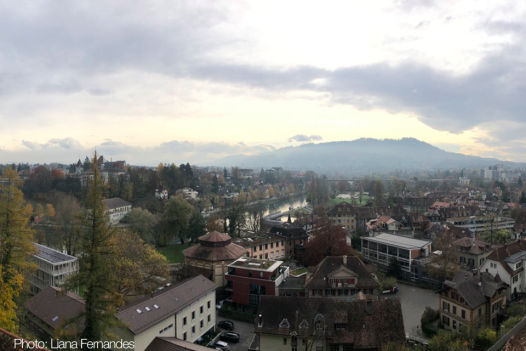
Only two hours away from Geneva is Bern. Bern is gorgeous, has many German influences, including in its cuisine, a beautiful medieval architecture, and its historic Centre is an UNESCO World Heritage. Among the must-see attractions are the Bear Park near the Aar River, the Cathedral, the Federal Palace, the Einstein House and the Clock Tower, which every hour shows the medieval figures making sounds and
moving around. Many people stand in front of the clock, trying to guess which action will be presented!
There are many attractions to be seen in Bern. Just following the Clock Tower, if you go through the Marktgasse street, you’ll see stores and fountains with potable water. I found it a bit difficult to walk over there, as the sidewalks are full of people and bus and trams are always around, but one of the most famous fountains is located on the Kramgasse street, the Zähringerbrunnen, which is an UNESCO World Heritage.
And the last but not least, if you are an Einstein fan, visit the apartment where he lived from 1903 to 1905, and where he developed the Theory of Relativity. His apartment is located on the same Kramgasse street, but around the city you can also see statues of him and pose for a photo.
•46% of the food that ends up in the garbage is waste;
•Between 40% and 50% of food wasted worldwide is roots, fruits, oilseeds and vegetables. 20% are meat and dairy products;
• In Brazil, 14 million people are hungry. The amount of wasted food could feed 11 million. Worldwide, 815 million people are hungry.
By Liana Fernandes
Originally published in Blog Lia Fernandes, in September 2019.
These are data from FAO, the Food and Agriculture Organization of the United Nations, which has warned that every year, 1.3 billion tonnes of food is wasted or lost during production worldwide. The amount would feed about 2 billion people (42.5 million go hungry in Latin America and the Caribbean).
⠀⠀⠀⠀⠀⠀⠀⠀⠀
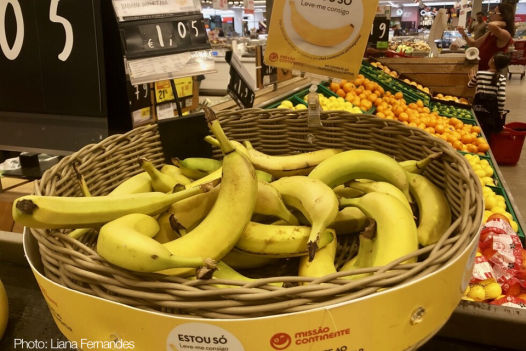
Attitude makes a big difference. Shopping in a supermarket I used to go when I lived in Portugal, I have seen this action that I thought great, simple and assertive: a basket with bananas loose from their bunches, due to some failure in the production chain or the action of the customers themselves. They appealed to buyers to be conscious.
Every time I went there, there were bananas in the basket. Some days more, some days less, but that basket was never empty.
⠀⠀⠀⠀⠀⠀⠀⠀⠀
Knowing that our attitudes affect other people is one thing. Seeing the impact of that, looking at messages like that in the basket (I am alone. Take me with you.) is another. I hate wasting food, I think about people who have nothing to eat. So, seeing and knowing of companies that walk towards the greater good is comforting. And thinking like me, for sure there will be other customers.
⠀⠀⠀⠀⠀⠀⠀⠀⠀
The UN 2030 Agenda
The UN 2030 Agenda defined in the Sustainable Development Goal the target of halving the
world per capita waste by that year, and also reducing losses in production and supply chains. According to the FAO, some food banks in Costa Rica, Chile, Guatemala, Argentina, the Dominican Republic, Brazil and Mexico already collect food that would otherwise be discarded for redistribution, which is a great move!
The company Save Food is another excellent example of good practices to minimize waste, as this global initiative, which is a partnership with the German company Messe Düsseldorf, carries out campaigns all over the world. With everyone doing what they can, it is a win-win.
Luzinete and Maria Eduarda
After three attempts at natural childbirth, the youngest daughter of Luzinete Silva Monteiro, 32, was born by cesarean section on the afternoon of July 9, 2008, at the Bom Pastor Maternity Hospital, in Queimados, Rio de Janeiro. But shortly afterwards Maria Eduarda went urgently to the intensive care unit of the Vereador Melchiades Calazans State Hospital (HEMEC), in Nilópolis. The girl had constant hypoglycaemia and needed glucose serum 24 hours a day.
By Liana Fernandes
Originally published in Reader's Digest Brazil (Seleções), in Portuguese, in May 2009.
Still recovering from childbirth and with little information about her daughter's condition, Luzinete asked her husband, Bruno Leal Silva, 26, to accompany Maria Eduarda to the other hospital. When she was discharged the next morning, she took a train and went to see her daughter. Doctors believed the girl would be fine in a few days.
But 4 months went by, and Maria Eduarda was still in the intensive care. In order to spend more time with her children and husband, Luzinete decided to spend the mornings at home and only go to the hospital after taking the kids to school, around 1 pm. From then on, she didn't leave Maria Eduarda until 7 pm.
Finally, the doctors at HEMEC presented the diagnosis of inborn error of metabolism: hereditary disorder resulting from the deficiency of enzymatic activities, which blocks several metabolic pathways, which can generate problems in physical and mental development. And for Maria Eduarda, that would be responsible for the low blood glucose level. Luzinete suffered when imagining her daughter depending on serum for her entire life. But things got even more difficult when the hospital where she was in could no longer attend to her; Maria Eduarda needed a ward specialized in complex cases.
Luzinete then got what seemed impossible: a place for her daughter at the renowned Instituto de Puericultura e Pediatria Martagão Gesteira, IPPMG, at UFRJ, where Maria Eduarda has been since November. Doctors have ruled out the first diagnosis and carry out tests to evaluate the existence of an insulinoma,
a pancreatic tumor, because of irregular insulin production.
The prognosis is difficult and the girl is not expected to be discharged. Luzinete's other children didn't get a place in public school this year, and her husband had to quit his job in the construction market to stay with them at home.
With the lack of money, the children had nothing to eat. Today, the family lives with unemployment credit, which is running out. But Luzinete is confident in her daughter's recovery: “I'm going to see Duda cured. One day I will leave this hospital hand in hand with her.”
Josefa and João Paulo
Josefa Nascimento, 35, was six months pregnant when she had her first ultrasound, in July 2005, She was going to have a baby boy! But the doctors noticed something wrong with the child. His development did not correspond to a six-month gestation.
At nine months, despite the baby not being fully formed, Josefa had to have an emergency cesarean section: doctors found dangerous loops of the umbilical cord around the baby's neck. João Paulo was born on the morning of October 26th and was taken immediately to the intensive care unit.
The next day, Josefa went to see her son. The eyebrows were missing from João Paulo's face, and the palate was open. His feet were curved; his hands, closed like claws. And his arms were rigid and crossed. João Paulo had Moebius syndrome, a disease characterized by a paralysis that affects the movement of the eyes
and face. “I felt like the most powerless person in the world for not being able to help him. I offered my life to God in exchange for his health,” he says.
To spend more time with her son, Josefa, who has been an elementary school teacher for 15 years and works at the Federal District's education department, amended her maternity leave and vacations. She spent eight months with João, who needed a gastrostomy, to swallow the food, and a tracheostomy, to breathe easily.
When that period ended, she had her workload reduced from 40 to 30 hours a week and started going to work at 5:30 am. Thus, she can spend the afternoons with João Paulo, who is at the Hospital Regiona da Asa Sul, the HRAS. “I arrive, I bathe him, and even though the hospital provides us with bedding, I make sure my son wears our colorful sheets,” he says.
When she leaves the hospital at 6:30 pm, Josefa faces a two-hour journey back to her house, where the family is waiting for her – she has four more children: Kennedy, 17, twins Victor and David, 13, and Jean, of 10, that has a disease that affects the irrigation of the bones of the hip and femur, and requires daily Physiotherapy.
João Paulo, who was once considered blind, now loves books. He remains in the hospital, moves slowly and needs a ventilator at night. Despite the difficulties, Josefa is a tireless mother, who dreams of seeing her family together: “Each advance of João Paulo is a prize. He will be 4 years old in October and has never stopped fighting for his life. This is my greatest lesson.”
Paris has many charms, so it is not difficult to fall in love with the city. On this trip, we stayed at Île St. Louis. If you want a place with easy access to tourist attractions, this is an excellent area, surrounded by bistros, with Notre-Dame Cathedral and the Seine within walking distance.
By Liana Fernandes
Originally published in Blog Lia Fernandes, in Portuguese, in February 2018.
A basic Paris visit would embrace the Eiffel Tower, Jardin du Luxembourg, Louvre Museum, D’Orsay Museum, Champs-Élysées, Notre-Dame and Sacre-Coeur, taking the opportunity to go up to Place du Tertre (Dalí used to walk around there) and Piccadilly. Along this route, you will explore the best and most beautiful things about the city: art, cuisine, landscapes and impeccable architecture.
Among the experiences I recommend are crepe at food trucks on the Champs-Élysées, onion soup at any French restaurant, cheese and wine at La Mère Catherine (France's first bistro), and dinner at Cafe de Flore, another bistro from the Second World World War, which used to host artists and philosophers such as Sartre and Simone de Beauvoir. If you have extra days, it's worth taking the Champagne route in Épernay, visiting the Palace of Versailles and Monet's Gardens, in Giverny.
The riches of Normandy
Getting out of the traditional is Normandy. The city is very rich in WWII stories, and it's exciting how much energy one can feel there.
In addition to walking along the beautiful streets, full of shops and souvenirs, we visited the D-Day beaches, Omaha Beach, Gold Beach, Arromanches, the Normandy American Cemetery and Memorial, the D Day
Museum, the Memorial Museum d'Omaha Beach, and the Pointe Du Hoc, where you can see many remnants of what the German army organized during the war. There are still intact many bunkers built by them. Nowadays, Pointe Du Hoc is a sort of American memorial, with photos and plaques about the soldiers who lost their lives on the battlefield.
But for those looking for breathtaking landscapes, Normandy has it too. We visited the cliffs of Étretat, on the edge of the English Channel. One of the most beautiful places I've ever seen! We walked inside a cave, climbed stairs carved in stone (not very easy with children) and reached the other side of the beach. There are incredible rocky walls, so wear comfortable sneakers, take a bottle of water and walk through the hills, every climb is worth it, believe me!
Accommodation in Ruen?
If you're looking for a busier spot, Rouen, the capital, has nightlife and is easy to explore, as everything is close to the historic Centre. And, in practically all the stores, you will find delicious cheeses and caramels!
In Ruen there is the monument in honor of Joan of Arc, exactly where she was burned, and the Episcopal Palace, where you can see a bit of her trajectory. There is also the beautiful Rouen
Cathedral (Cathédrale Notre-Dame de Rouen), where Dukes of Normandy and the heart of “Richard the Lion Heart” (King Richard I of England) are buried. And you can still find lots of art, as the Museum of Fine Arts houses works by Caravaggio, Velásquez, Delacroix, Mondigliani and Monet.
The special Mont Saint-Michel
You may have seen a photo of the Mont Saint-Michel looking as an island. This phenomenon occurs at high tides, during periods of full and new moons. If you want to see it, the official website informs the tide times daily. This fact made me want to go there, but like almost everything in France, this mont has history.
Mont Saint-Michel was a shrine in honor of the Archangel St. Michael, turned into a prison, housed the prisoners of the French Revolution, and then it was restored as a shrine. It is considered a UNESCO World Heritage Site, managed by the State, and today it is a medieval village, where there are vestiges of the 100 Years War, restaurants and shops, and where daily celebrations take place, organised by the monks and sisters of the Monastic Fraternity of Jerusalem.
So, for those who do not know what France can offer to tourists, I would say: many things, but specially culture.
Created with Mobirise software